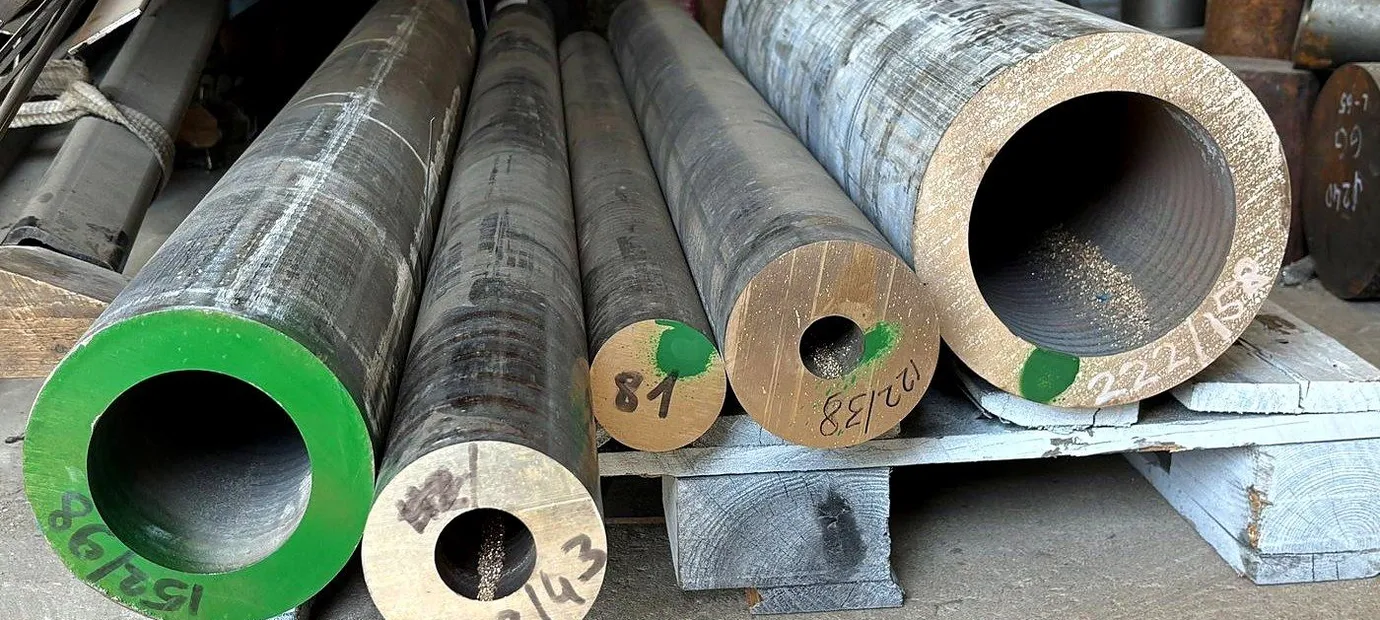
In short: how brass, bronze and copper differ
All three materials are copper-based. The difference is in the alloying elements, and they define the properties.
- Brass is copper with zinc. It is cheap to cut, machines well and resists water and air. Not for heavy loads or for unprotected sea water.
- Bronze is copper with tin or aluminium. It carries load and wear and is not afraid of sea water. More expensive than brass and slower to machine.
- Copper has almost no additions. It conducts electricity and heat best of all, but it is soft. Not suitable for load-bearing parts.
A simple rule: friction and load — bronze; machining and fittings — brass; current and heat — copper.
Table: part → alloy → EN grade
| Part | Alloy | EN grade | Why |
|---|---|---|---|
| Bushings, plain bearings | Tin bronze | CuSn8 (CW453K), CuSn12-C (CC483K) | Carries load and wear, works with lubrication |
| Shafts, axles, pins | Brass or bronze | CuZn39Pb3 (CW614N), CuSn8 (CW453K) | Easy to turn, does not rust |
| Worm wheels, gear parts | Cast tin bronze | CuSn12-C (CC483K) | Low friction against a steel worm |
| Flanges, adapters, fittings | Brass, gunmetal | CuZn39Pb3 (CW614N), CuSn7Zn4Pb7-C (CC493K) | Fast machining, tight joints |
| Water fittings | DZR brass | CuZn36Pb2As (CW602N) | Resists dezincification in water |
| Pump and marine equipment parts | Aluminium bronze | CuAl10Ni5Fe4 (CW307G) | Strength and resistance in sea water |
| Sea water and cooling pipes | Copper-nickel | CuNi10Fe1Mn (CW352H), CuNi30Mn1Fe (CW354H) | No corrosion in sea water, less fouling |
| Busbars, contacts, electrodes | Copper | Cu-ETP (CW004A) | Highest electrical and thermal conductivity |
The table is a guide for typical cases. If the drawing specifies a grade, use it. If there is no grade, send us the drawing and we will select the alloy for the operating conditions.
Brass: when machining speed matters
CuZn39Pb3 (CW614N) is free-machining brass, the most common grade. Lead makes the chips short, so parts are turned quickly with a clean surface. It is used for fittings, nuts, valve bodies, axles and pins. It is the first candidate for any turned part without special requirements.
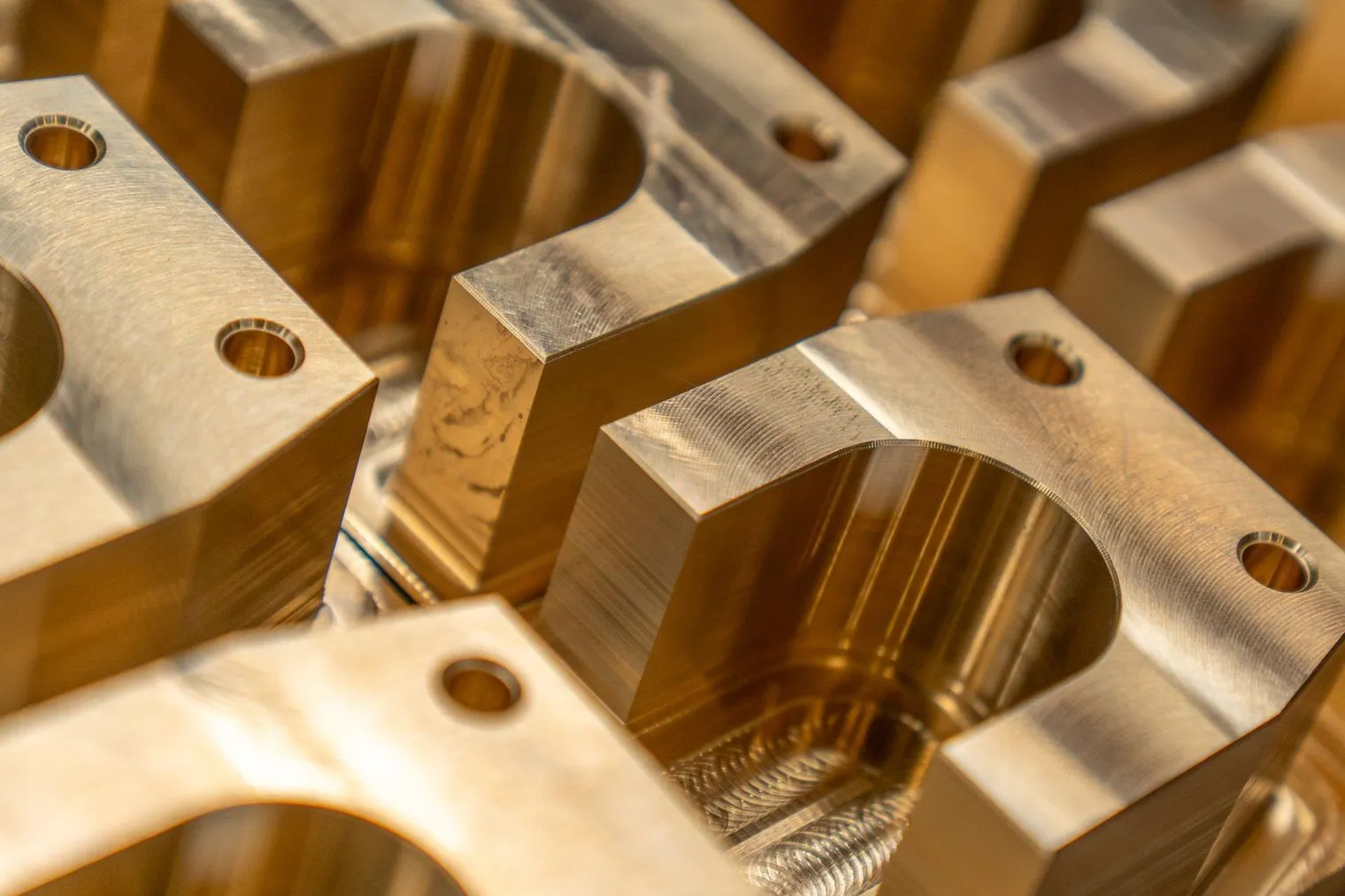
CuZn37 (CW508L) is lead-free brass. It is more ductile: it can be bent, stamped and flared. Suitable for sheet parts, small tubes and wherever lead in the composition is undesirable.
CuZn36Pb2As (CW602N) is dezincification-resistant brass (DZR). In warm, hard water ordinary brass loses zinc over time and becomes brittle. Arsenic in the alloy stops this. Use it for water supply and heating fittings and for heat exchangers. Usually made to order.
Bronze: load, wear and sea water
CuSn8 (CW453K) is wrought tin bronze in bar form. Strong and springy, it handles alternating loads well. Typical parts are bushings, guides, spring elements and small gear parts.
CuSn12-C (CC483K) is cast tin bronze. It is the main material for worm wheels and heavily loaded bushings. Against a steel worm or shaft it gives low friction and wears slowly. Supplied as cast bars and bushings.
CuSn7Zn4Pb7-C (CC493K) is leaded gunmetal. Lead helps the part run with poor lubrication and at low speeds. That is why it is chosen for bushings and bearings with infrequent maintenance, and for pressure-tight fittings. Usually made to order.
CuAl10Ni5Fe4 (CW307G) is nickel aluminium bronze. Its strength is comparable to structural steel, but it does not rust in sea water. It is used for pump parts, valve seats, fasteners and critical parts of marine equipment. Usually made to order.
Copper and copper-nickel alloys
Cu-ETP (CW004A) is electrolytic copper. It is used where conductivity matters: busbars, contacts, electrodes, heat exchanger parts. For mechanically loaded parts it is too soft. For brazing and welding in a hydrogen atmosphere, oxygen-free copper is the better choice — ask when ordering.
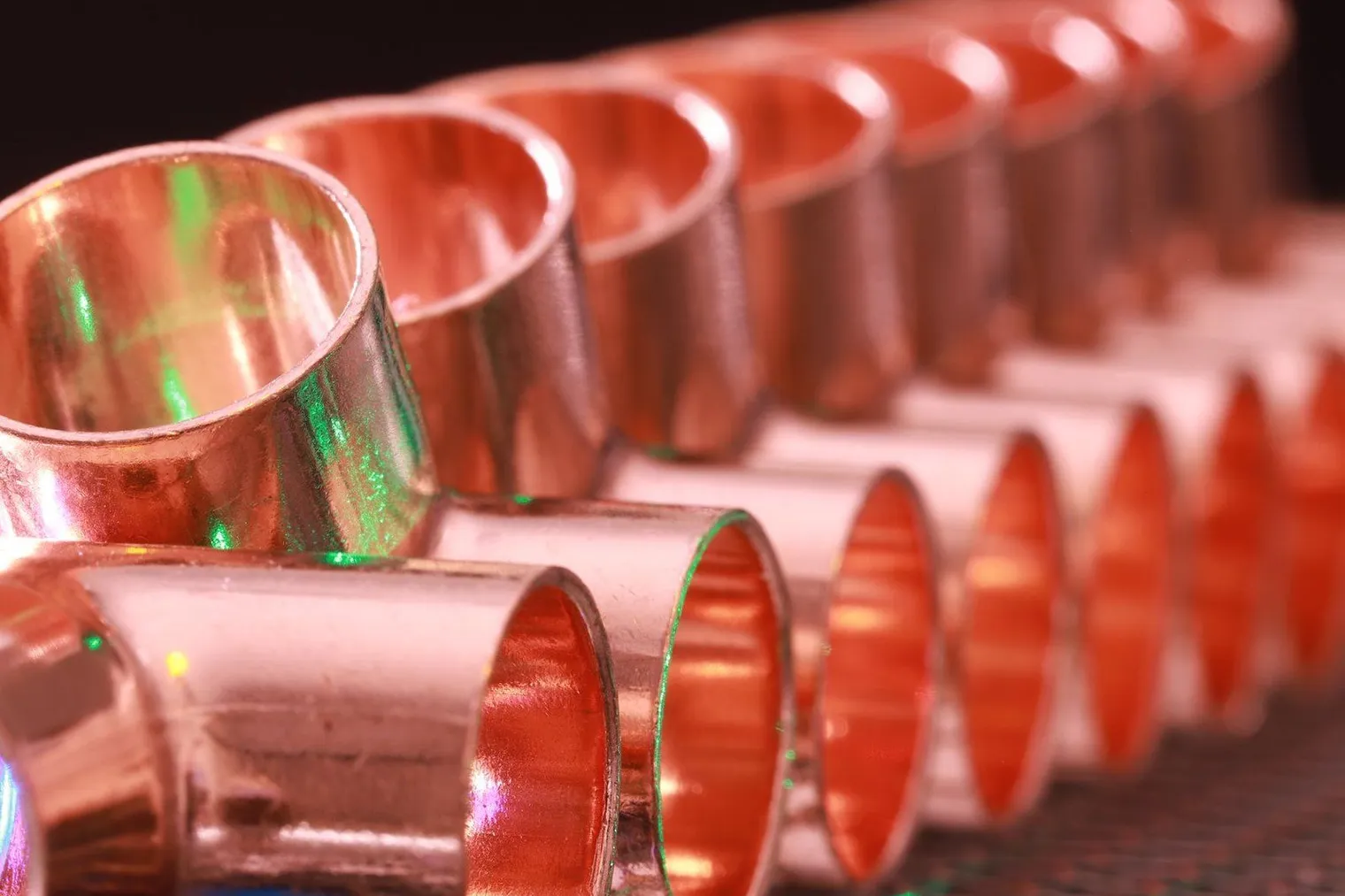
CuNi10Fe1Mn (CW352H) and CuNi30Mn1Fe (CW354H) are copper-nickel alloys. In sea water they hardly corrode and foul less. The main form is tube: cooling systems, ship piping, sea water heat exchangers. The 30 % nickel alloy is stronger and more expensive; it is used where flow velocity and temperature are higher. CuNi bars are used for flanges, adapters and connecting parts in the same systems. Usually made to order.
What is usually in stock and what is made to order
- Usually in stock in Tallinn: CuZn39Pb3 (CW614N), CuZn37 (CW508L), CuSn8 (CW453K), CuSn12-C (CC483K), Cu-ETP (CW004A).
- More often to order: CuAl10Ni5Fe4 (CW307G), CuSn7Zn4Pb7-C (CC493K), CuZn36Pb2As (CW602N), CuNi10Fe1Mn (CW352H), CuNi30Mn1Fe (CW354H).
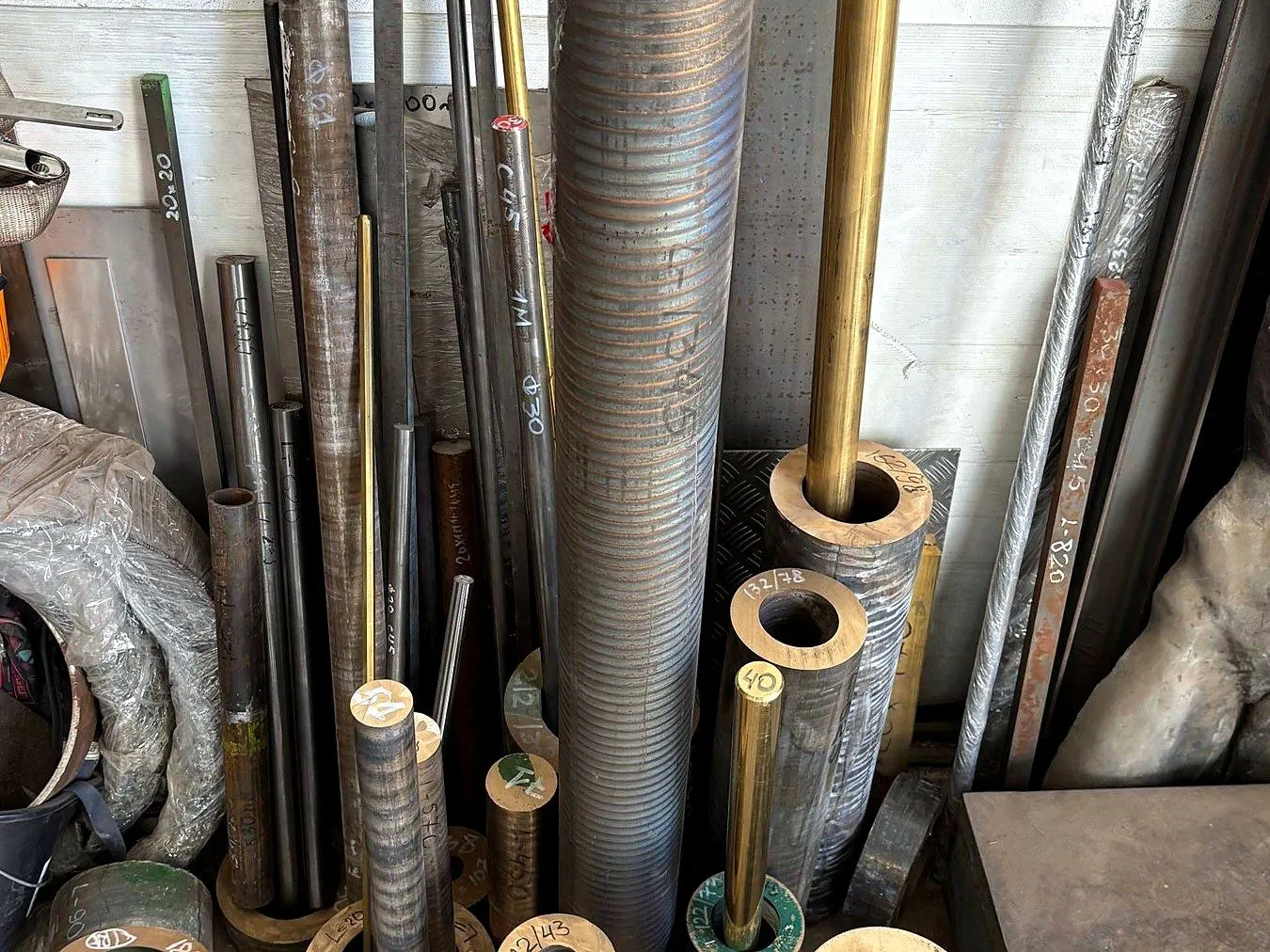
Availability depends on grade, profile and size — please check when enquiring. For made-to-order items the lead time is usually from a few days to a few weeks.
How to order
So that we can quote price and lead time straight away, include in your enquiry:
- the EN grade (for example CuSn12-C), or the purpose of the part if there is no grade;
- the profile: round, hexagon, flat, hollow bar, tube, sheet;
- the size: diameter or cross-section, length; for tube — outside diameter and wall;
- the quantity: pieces, metres or kilograms;
- whether you need a 3.1 certificate to EN 10204 — issued on request;
- a drawing, if you need a finished part rather than stock material.
The full list of forms and grades is in the Non-ferrous metals section. We cut to length; small batches are not a problem.
Need a finished part rather than stock? We make bushings, flanges, worm wheels and other parts to your drawing: casting, turning and milling, from one piece to a series. Send the drawing as PDF or DWG — we will select the alloy and confirm price and lead time.
Questions and answers
01What is the difference between brass and bronze?
Brass is an alloy of copper and zinc; bronze is copper with tin or aluminium. Brass is cheaper and faster to machine. Bronze is stronger and resists wear and sea water better.
02Which alloy should I use for a bushing?
For most bushings, tin bronze CuSn8 or CuSn12-C. With poor lubrication, CuSn7Zn4Pb7-C. If the load is light and price matters, brass CuZn39Pb3 will do.
03Can brass be used in sea water?
Ordinary brass is not recommended: it dezincifies. For sea water use aluminium bronze CuAl10Ni5Fe4 or copper-nickel alloys.
04Do you provide a certificate for the metal?
Yes. On request we issue a 3.1 certificate to EN 10204 with chemical composition and mechanical properties. Mention it in your enquiry.